National Weather Service forecasts · checked 2:07 PM EDT, Thursday
Snow Day Calculator
Will school be closed tomorrow? Type your school's ZIP code to see the chance of a snow day, a late start or school as usual, worked out from the National Weather Service forecast and the snow it usually takes to close schools where you live.

Snow Day Calculator
Will there be school tomorrow? Type your ZIP code.
The next school day across the country
Every half hour we run the same numbers for the six largest cities in each state. Your own ZIP code can differ: a town in the hills or the snow belt is not its state's big city.
Next school day (Friday in most places) · checked 2:07 PM EDT, Thursday
- Under 5%
- 5 to 24%
- 25 to 49%
- 50 to 74%
- 75% or more
No snow days in sight
None of the 296 cities we check has even a 5% chance of a snow day on its next school day. A small town in the mountains or the snow belt can differ from its state's big cities: type your own ZIP code into the calculator.
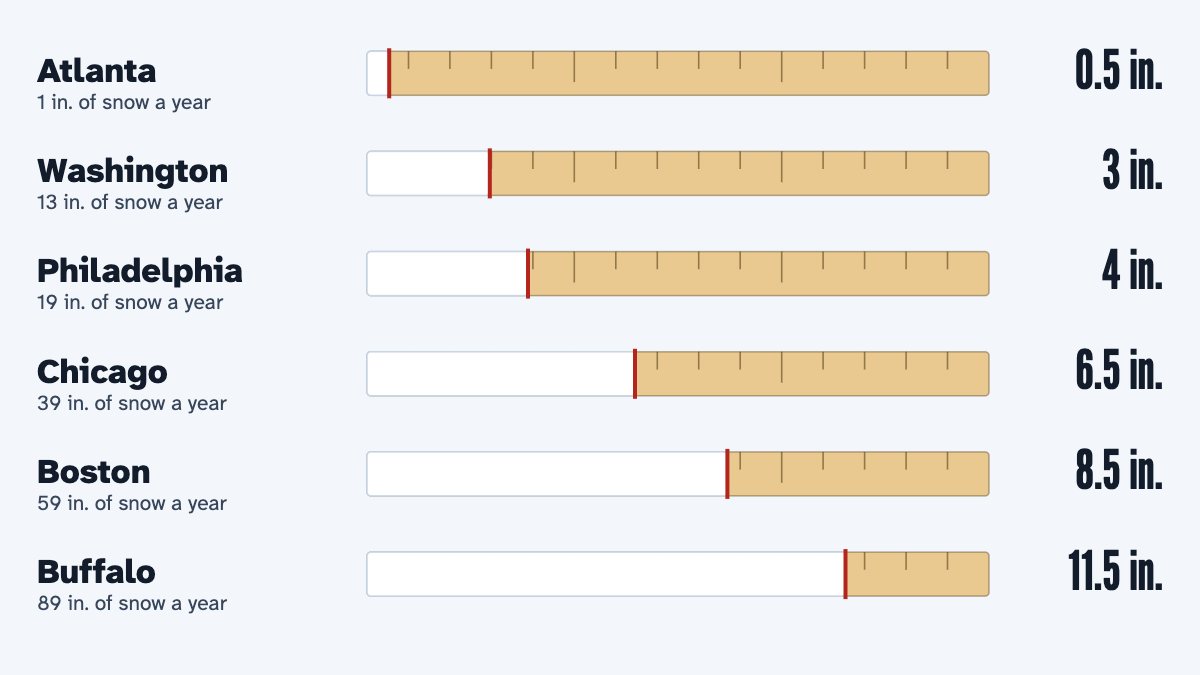
Half an inch in Atlanta, nearly a foot in Buffalo
The same storm closes schools in one city and barely slows the buses in another. Places that rarely get snow have few plows and drivers who seldom drive on snow or ice, so a little is enough. Snowy places clear roads overnight as a matter of routine.
So the calculator does not use one number for the whole country. It starts from how much snow your area gets in a normal year, NOAA's 1991–2020 average for the weather stations nearest your ZIP code, and works out the snowfall that usually closes schools there.
Snow days state by state
Each state's page has its cities' chances for the next school day, how much snow falls there in a normal year, and what happens to the school year when schools close, from the state's own law.
- Alabamaunder 1%
- Alaskaunder 1%
- Arizonaunder 1%
- Arkansasunder 1%
- Californiaunder 1%
- Coloradounder 1%
- Connecticutunder 1%
- Delawareunder 1%
- District of Columbiaunder 1%
- Floridaunder 1%
- Georgiaunder 1%
- Hawaiiunder 1%
- Idahounder 1%
- Illinoisunder 1%
- Indianaunder 1%
- Iowaunder 1%
- Kansasunder 1%
- Kentuckyunder 1%
- Louisianaunder 1%
- Maineunder 1%
- Marylandunder 1%
- Massachusettsunder 1%
- Michiganunder 1%
- Minnesotaunder 1%
- Mississippiunder 1%
- Missouriunder 1%
- Montanaunder 1%
- Nebraskaunder 1%
- Nevadaunder 1%
- New Hampshireunder 1%
- New Jerseyunder 1%
- New Mexicounder 1%
- New Yorkunder 1%
- North Carolinaunder 1%
- North Dakotaunder 1%
- Ohiounder 1%
- Oklahomaunder 1%
- Oregonunder 1%
- Pennsylvaniaunder 1%
- Rhode Islandunder 1%
- South Carolinaunder 1%
- South Dakotaunder 1%
- Tennesseeunder 1%
- Texasunder 1%
- Utahunder 1%
- Vermontunder 1%
- Virginiaunder 1%
- Washingtonunder 1%
- West Virginiaunder 1%
- Wisconsinunder 1%
- Wyomingunder 1%
Guides
-
-
-
-
-
-


Questions people ask
How does the snow day calculator work?
It reads the National Weather Service forecast for the part of your ZIP code where most people live: the snow and freezing rain expected from 6 AM the day before school to 3 PM on the day, the wind chill at bus-stop time, and any winter warning in force. It weighs snow that falls overnight and while buses run more than snow that falls during the school day, then compares the total with the snow that usually closes schools where you live, which depends on how much snow your area gets in a normal year (NOAA's 1991–2020 climate normals). By our rule of thumb, places that rarely see snow close for half an inch, and snowy places need far more. Every rule is written out here.
How accurate is the snow day calculator?
It can only be as good as the forecast and our rule of thumb, and only your district decides. Snow forecasts miss: the Weather Service office for Baltimore and Washington says that about one in three of its winter storm warnings does not reach warning size, often because less snow falls than expected. We found no independent test of any snow day calculator's accuracy, ours included, so we do not claim a success rate. What we can promise is that the reasons behind each number are shown, so you can judge it yourself.
What time do schools announce snow days?
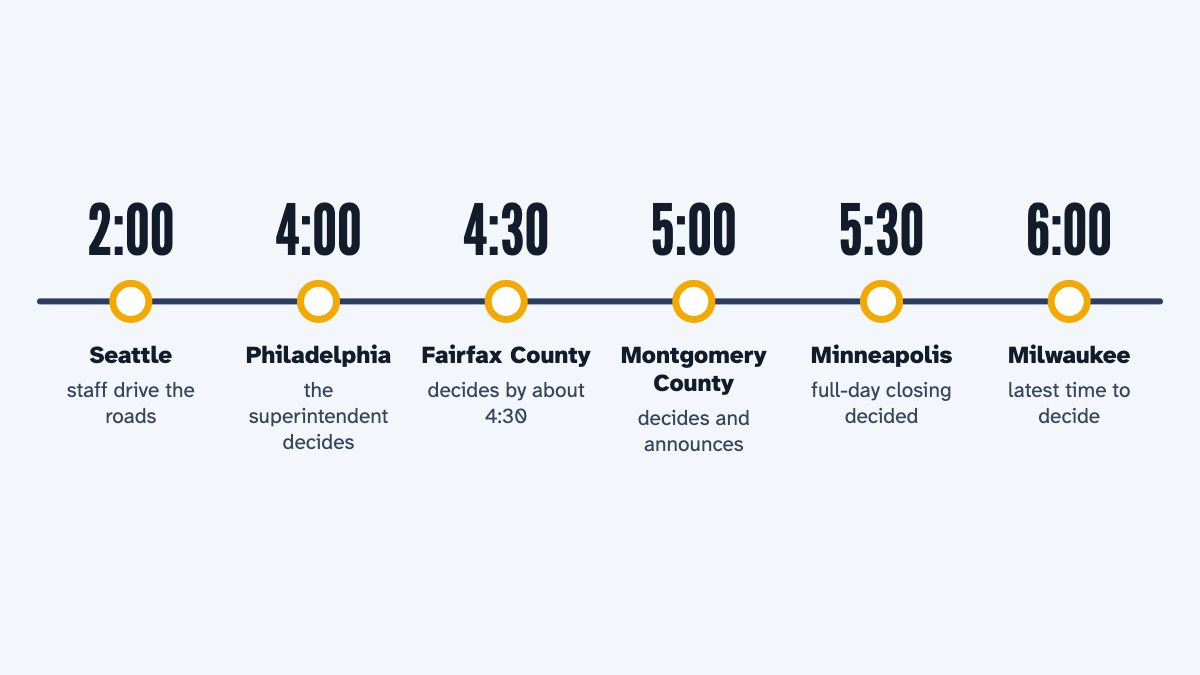
Usually between 4:30 and 6 in the morning. Districts' own pages give their clocks: Fairfax County, Virginia decides by about 4:30 AM; Montgomery County, Maryland and Atlanta by 5 AM; Minneapolis no later than 5:30 AM; Milwaukee no later than 6 AM. When a storm is certain, some decide the evening before: Montgomery County announces by 7 PM, and Philadelphia by 9 PM. Most wait for the morning because forecasts shift overnight.
How much snow does it take to close school?
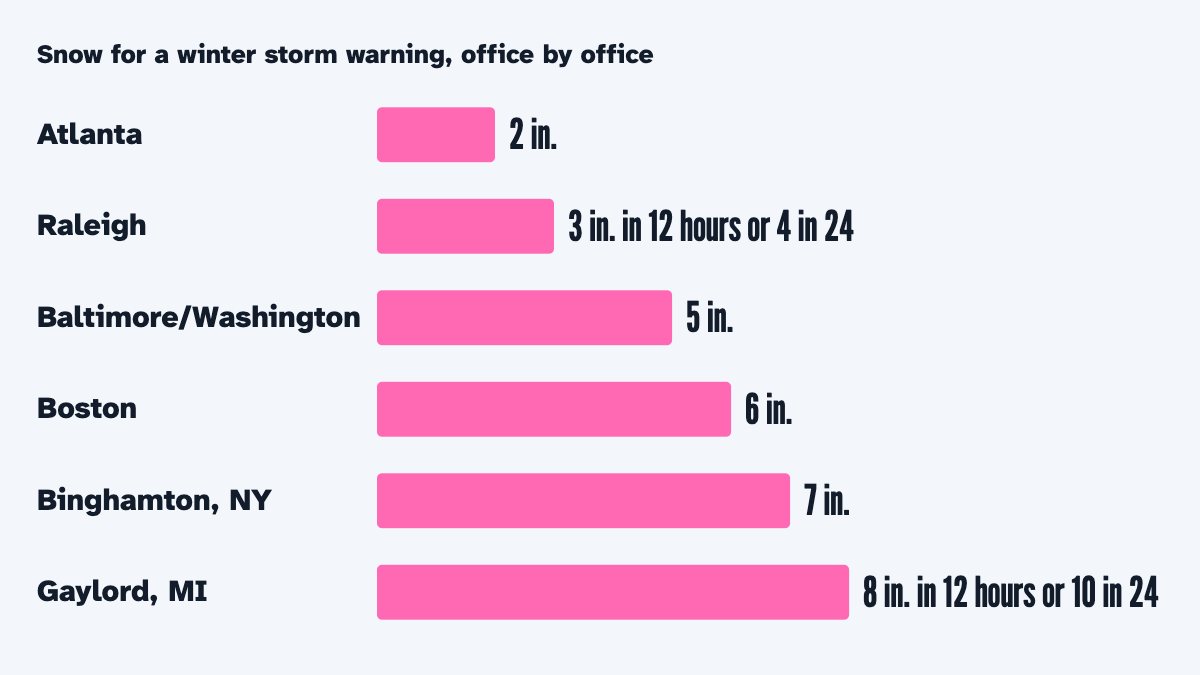
It depends on where you live. The Weather Service sets its own warning levels office by office: a winter storm warning means about 2 inches around Atlanta but 6 inches around Boston and 8 inches in 12 hours or 10 in 24 in northern Michigan. Massachusetts schools did, in one study: economist Joshua Goodman found that days with 10 inches or more closed schools, while days with 4 to 10 inches mostly kept them open but kept more students home. Our rule puts the usual closing point at about half an inch in Atlanta, 3 inches in Washington and 11½ in Buffalo. See it for your area.
How cold does it have to be to cancel school?
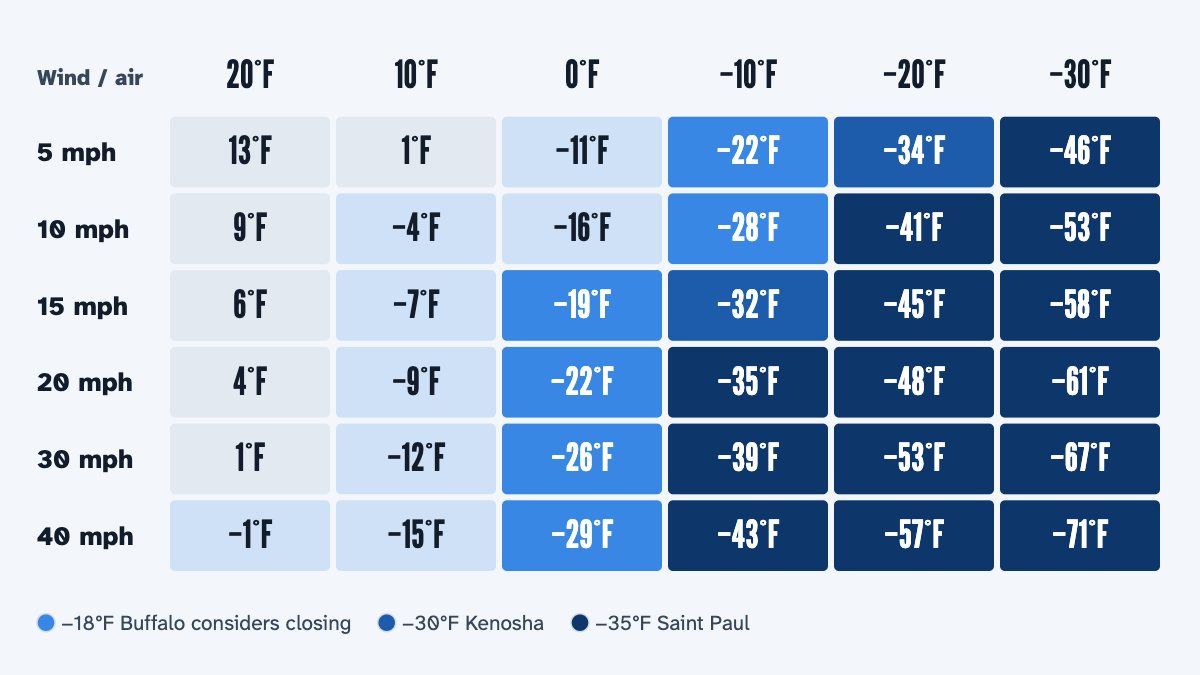
Most districts that publish a number use the wind chill; Saint Paul names the 6 AM forecast. Saint Paul, Minnesota makes the day a non-school day when the wind chill is forecast to be −35°F or colder at 6 AM; Kenosha, Wisconsin lists a sustained −30°F wind chill or −20°F air temperature among its reasons to close; Buffalo, New York will consider closing at −18°F. Others close when the Weather Service issues an Extreme Cold Warning. Around Atlanta, the Weather Service issues an Extreme Cold Warning at 0°F. More on cold days.
What is the difference between a snow day, a late start and an e-learning day?
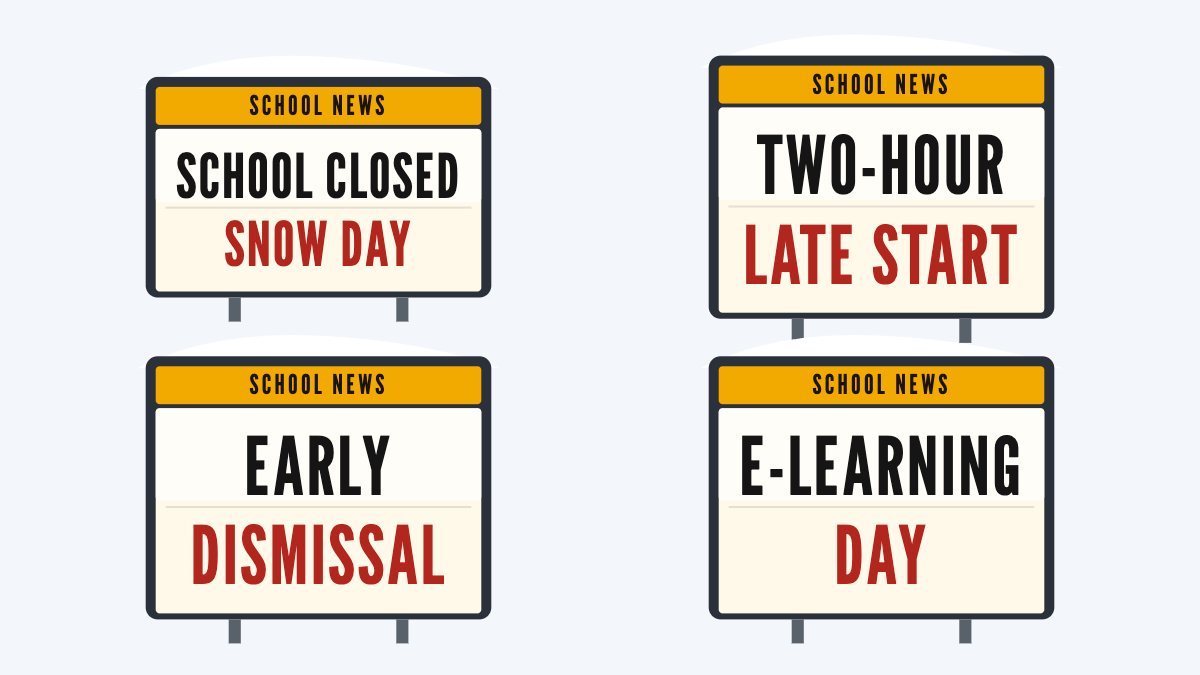
On a snow day school is closed, and the day often has to be made up later in the year. A late start (often a two-hour delay) gives crews time to clear roads and lots while the sun comes up. Some districts now switch bad-weather days to remote learning instead: New York City closed its buildings on January 26, 2026, and taught remotely. Each state sets its own rules on make-up days and remote days; your state's page has them.
Why does the calculator ask how easily my district closes?
Districts next door can decide differently with the same snow: a city with many plows and short bus routes stays open when a rural district with hilly routes closes. If you know your district closes at the first flake, or almost never, tell the calculator and it moves its closing point for you.
Can this site tell me whether my school is closed?
No. Only your school district decides, and its website, app, phone calls and local TV and radio are where it tells families. This site is independent: it is not run by any school, district or government agency. It gives you a forecast-based chance so you know what to expect.